
Healthy Aging2 min read
Peptide Skincare, Explained: How to Choose Your Next Serum
Meet the ingredient category attracting attention—and find a place for it in a routine that already works for you.
Recomp Report Editorial Team · 29 October 2026
Peptide fundamentals, laboratory testing, analytical methods, study breakdowns and research news. Everything here is free to read without registration.
27 articles
Meet the ingredient category attracting attention—and find a place for it in a routine that already works for you.
Recomp Report Editorial Team · 29 October 2026

Your training plan has a finish line. Your post-workout routine deserves one, too.
Recomp Report Editorial Team · 29 October 2026

Consistent training and scattered daily focus can coexist. Here is what ADHD actually involves, which treatments have evidence, and why Semax, Selank and GLP-1 headlines do not answer the question.
Recomp Report Editorial Team · 25 October 2026

When pain interrupts training, the temptation shifts from keeping muscle to accelerating repair. What BPC-157 and thymosin beta-4 research shows—and what “TB-500” claims leave out.
Recomp Report Editorial Team · 21 October 2026

The scale moves, but the lifter’s question stays the same: what am I keeping? Body-composition research helps separate fat loss, lean mass, and the claims around growth-hormone peptides.
Recomp Report Editorial Team · 21 October 2026

Hunger was never just a test of character. Incretin-based medicines changed the conversation by targeting biological signals—and newer research is asking what comes next.
Recomp Report Editorial Team · 12 October 2026

The training is familiar. The molecular names are new. Before the next chapter begins, understand what peptides are—and why the same label can describe very different kinds of evidence.
Recomp Report Editorial Team · 11 October 2026

The diet ends, but the arc doesn't. What research says about weight maintenance, why regain is the default, and the unglamorous habits of the people who keep the result.
Recomp Report Editorial Team · 4 October 2026

Hunger is not a character flaw—it is a regulated biological system that pushes back when you diet. What research shows about appetite hormones, food environment, protein, sleep and stress.
Recomp Report Editorial Team · 30 September 2026

The cut is where you reveal what you built—but cut too hard and you reveal a smaller, weaker you. What research says about rate of loss, protein, training and diet breaks.
Recomp Report Editorial Team · 29 September 2026

You've been big, you've gotten strong, and now you want to change your body. Here's how to approach fat loss and recomposition without pretending you're starting from zero.
Recomp Report Editorial Team · 26 September 2026

Why does fat loss slow down even when you're still training? Understand metabolic adaptation, appetite, movement and what newer incretin research actually shows.
Recomp Report Editorial Team · 26 September 2026

BPC-157 and TB-500 are widely discussed in gym culture, but what does the evidence actually show? Separate animal research, human evidence and internet claims.
Recomp Report Editorial Team · 26 September 2026
Nerve health, skin biology, and cellular aging make compelling research targets. Here is what human, animal, and cell evidence can—and cannot—tell us.
Recomp Report Editorial Team · 21 September 2026
For lifters, body weight is only one metric. This guide separates trial results on fat and lean mass from claims about muscle retention, strength, and physique.
Recomp Report Editorial Team · 21 September 2026

Hormone changes are biological signals, not automatic proof of more muscle, strength, better sleep, or faster recovery.
Recomp Report Editorial Team · 21 September 2026
Injury makes fast-recovery claims compelling. Here is the difference between animal repair experiments, small human reports, and demonstrated return-to-training outcomes.
Recomp Report Editorial Team · 21 September 2026

MOTS-c connects mitochondrial biology with exercise and aging research—but human observations and mouse injections answer very different questions.
Recomp Report Editorial Team · 21 September 2026

A plain-language guide to peptide terminology, solution concentration, research-use labels, and the limits of laboratory documentation.
Recomp Report Editorial Team · 21 September 2026

A practical starting point for understanding diabetes treatment, peptide-based medicines, and questions worth bringing to a parent’s next appointment.
Recomp Report Editorial Team · 21 September 2026

A family-friendly guide to memory changes, Alzheimer’s research, and why promising early findings do not always become effective treatments.
Recomp Report Editorial Team · 21 September 2026
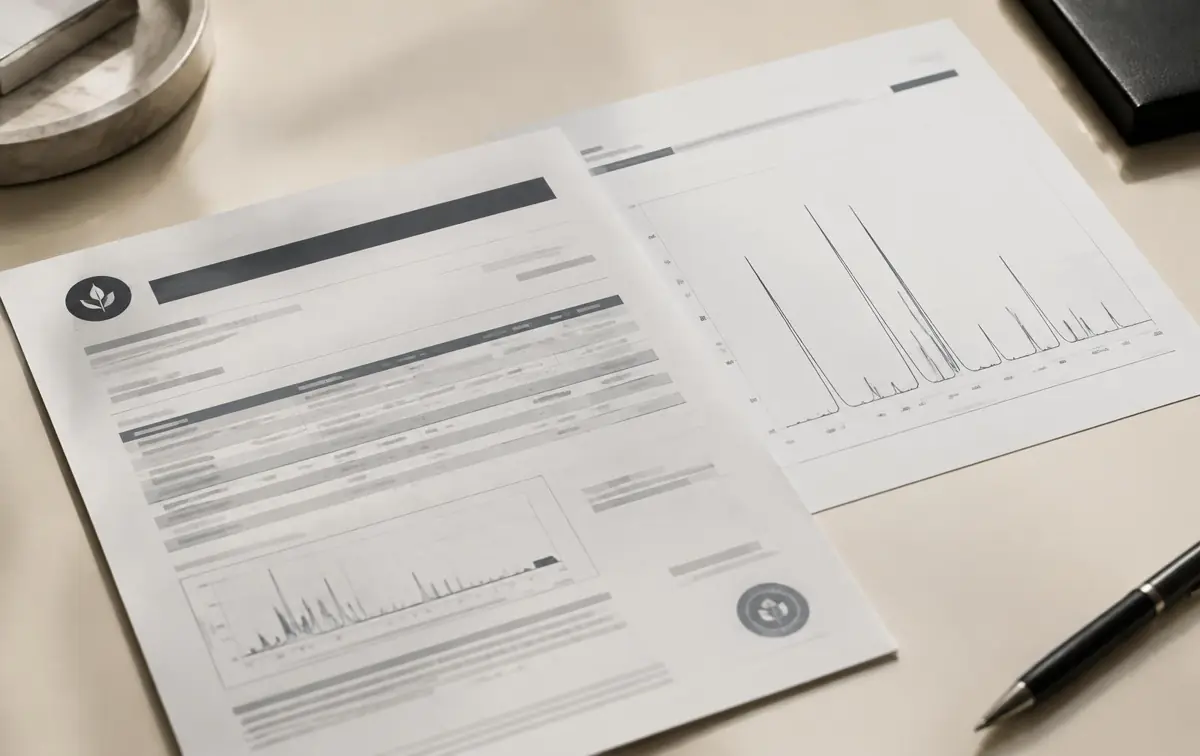
A certificate of analysis is a testing record, not a quality guarantee. Here is what each section actually reports and which questions it leaves open.
Recomp Report Editorial Team · 12 September 2026
Three words that are often used interchangeably describe three genuinely different measurements. Confusing them is the most common misreading of peptide test data.
Recomp Report Editorial Team · 6 September 2026
Separation and mass measurement answer complementary questions. Neither one alone characterises a peptide sample.
Recomp Report Editorial Team · 31 August 2026
Sterility and endotoxin content are not the same attribute, and passing one test says very little about the other.
Recomp Report Editorial Team · 25 August 2026

A study breakdown of how evidence tiers differ, what each design can establish, and where translation between them commonly fails.
Recomp Report Editorial Team · 19 August 2026

A plain-language introduction to the vocabulary that appears across peptide literature, specification sheets, and laboratory reports.
Recomp Report Editorial Team · 13 August 2026